Web Design The Woodlands: Why Local Expertise Makes a Difference
@journeyweb092
November 13, 2026 · 15 min read
A business website does not succeed because it looks modern in a screenshot. It succeeds when it earns trust fast, answers the questions real buyers have, and turns local traffic into calls, appointments, quote requests, and walk-ins. That is where local knowledge changes the outcome.
If you run a company in The Woodlands, your website is competing in a specific environment, not an abstract internet marketplace. You are speaking to homeowners in Creekside, professionals near Hughes Landing, families comparing providers after school pickup, medical patients trying to schedule quickly, and business buyers who want confidence before they ever speak with sales. The people browsing your site are shaped by the pace, income mix, expectations, and habits of this area. A generic agency two states away can make your site look decent. A team that understands The Woodlands can make it work harder.
That distinction matters more than most owners realize. I have seen well-meaning companies spend thousands on polished redesigns that still failed to improve leads. The colors were on brand. The animations were smooth. The stock photography was expensive. Yet the site missed obvious local cues, buried high-value services, and sounded like it could belong to a business in any suburb in America. Visitors felt no immediate relevance, and relevance is often what produces action.
Local expertise is not a marketing slogan
When people hear the phrase "local expertise," they sometimes reduce it to convenience. They picture an agency that can meet for coffee, knows the roads, and has worked with neighboring businesses. Those are real advantages, but they are not the main reason local web design matters.
The stronger advantage is judgment. A web designer who knows The Woodlands understands the difference between traffic that converts and traffic that simply looks nice in a report. They understand how local users search, what they worry about, and which details signal credibility. They know that a pediatric practice, a landscaping company, a law office, and a boutique fitness studio all serve different pockets of this community with different expectations around tone, pricing, speed, and trust.
That knowledge shapes decisions that outsiders often treat as cosmetic. Should the site emphasize family-friendliness or executive professionalism? Should a home services company lead with emergency response, premium craftsmanship, or neighborhood reputation? Should the homepage mention service areas right away, or would that crowd out a stronger value proposition? Those choices are strategic, not decorative.
Good web design in The Woodlands often starts with questions that sound simple but are not. Who is your best customer here, not nationally, but here? Are you trying to win affluent homeowners who compare three companies before reaching out, or busy parents who decide in under two minutes? Are your strongest opportunities in South Montgomery County, Spring, Magnolia, or right inside The Woodlands? What objections do local buyers bring into the process? How seasonal is demand? Which services carry the highest margins and should be featured more aggressively?
A local team tends to ask better questions because they can picture the buyer.
The Woodlands has its own business texture
The Woodlands is not Houston in general, and it is not a sleepy small town either. It sits in that interesting middle ground where people expect professionalism, speed, and a polished brand experience, but they still value local reputation and personal service. That combination changes how a website should be built.
For example, a company serving this market often needs stronger trust signals than a business in a lower-consideration area. Customers here may be more likely to read reviews, compare service pages, inspect the photography, and judge whether your brand feels established. They are not only buying a service. They are buying reassurance that they chose the right provider.
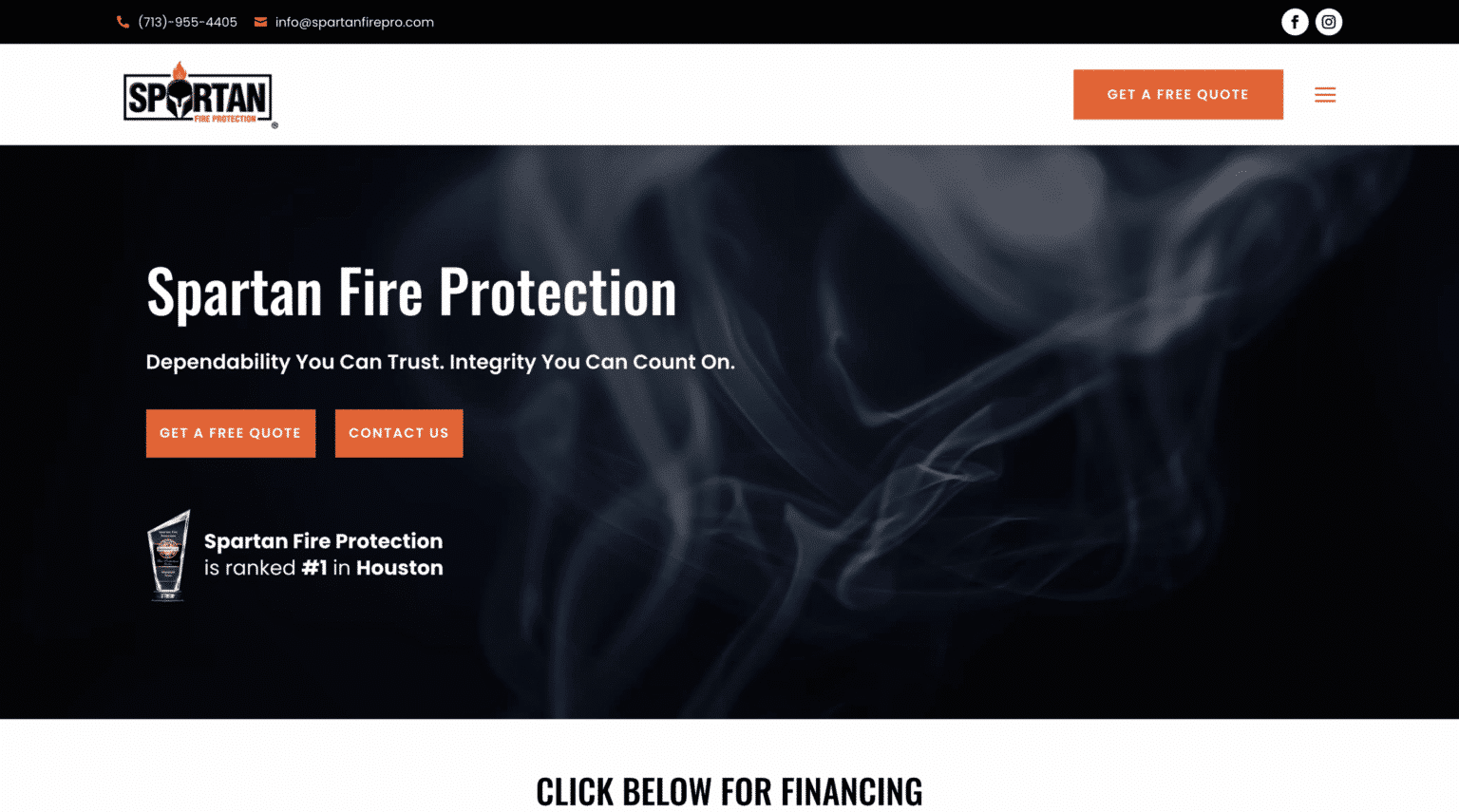
That affects structure. Website design for small business in The Woodlands should rarely be treated as a digital brochure. It needs to perform like a salesperson who is concise, credible, and easy to contact. If your homepage is full of vague statements like "quality service" and "customer satisfaction," you waste the most valuable seconds in the visit. Local audiences tend to respond better when they see specifics quickly. That might mean named service areas, pricing guidance where appropriate, examples of completed work, physician credentials, case types handled, or the exact process from inquiry to delivery.
One of the clearest patterns I have seen is this: businesses that speak concretely tend to outperform businesses that speak beautifully. The site that says, "We install and maintain irrigation systems across The Woodlands, Spring, and Conroe, with most repair calls scheduled within 24 to 48 hours," usually beats the one that says, "We deliver excellence through a customer-centered approach." One sounds useful. The other sounds like every competitor.
A local designer catches what a remote team misses
The mistakes on many business websites are rarely dramatic. They are subtle, cumulative, and expensive. A remote agency may not notice that the service-area page names towns locals do not mentally group together. They may not understand which neighborhoods signal affluence or where families cluster. They may choose imagery that looks generic or write copy that sounds detached from the region. None of those errors alone kills performance, but together they weaken trust.
I once reviewed a website for a home improvement company targeting The Woodlands. The design itself was attractive, but the hero image showed a style of housing that looked more like another part of Texas entirely. The copy referenced "serving the greater metro area" but never made a strong local connection. The call to action asked users to "start your digital transformation," which was absurd for a remodeling business. The bounce rate on mobile was high, and inquiry volume was inconsistent. The redesign that followed was not revolutionary. It was just grounded. We tightened service pages, replaced generic copy with local relevance, improved before-and-after galleries, clarified financing, and wrote headlines that reflected how homeowners actually shop. Leads improved because the site finally sounded like it belonged here.
That is the practical value of local web design. It reduces the number of wrong assumptions.
Search visibility is stronger when local intent is built in from the start
Search engine performance and web design are often treated as separate projects. On the ground, they are tightly linked. If your site architecture, internal linking, page intent, headings, and local messaging are weak, no amount of wishful thinking will make the site rank well for valuable local searches.
A team experienced in web design the woodlands will usually build pages around real local intent. That means understanding how people search by service, urgency, geography, and problem. Someone needing a family dentist may search differently from someone looking for emergency HVAC repair or corporate event catering. Local queries also tend to carry stronger conversion potential because the user is already narrowing options.
The benefit of local knowledge is not keyword stuffing. It is alignment. A strong site does not awkwardly repeat "web design the woodlands" or any other phrase just to satisfy a checklist. Instead, it builds content and navigation that match the real buying journey. Service pages target the right search themes. Contact pages reinforce place and accessibility. Testimonials, project examples, FAQs, and area pages answer local concerns naturally.
This matters especially for small businesses competing against larger brands. A national company may outspend you on advertising, but they often underperform in local relevance. That gives smaller businesses an opening. Website design for small business can be highly effective when it focuses on clarity, speed, local proof, and strong conversion paths. Small firms do not need giant websites. They need sharp ones.
Trust is built through details, not slogans
People decide quickly whether a business feels trustworthy, and websites accelerate that judgment. In The Woodlands, where many buyers are selective and comparison-oriented, the details carry extra weight.
The strongest local websites tend to get several things right at once:
- They show exactly what the business does and who it serves within seconds.
- They make contact easy on mobile, with clear calls, forms, and scheduling options.
- They use real proof, such as reviews, project photos, certifications, awards, or credentials.
- They explain process and expectations in plain English.
- They remove friction, especially on phones.
None of that is glamorous, yet it is where results come from.
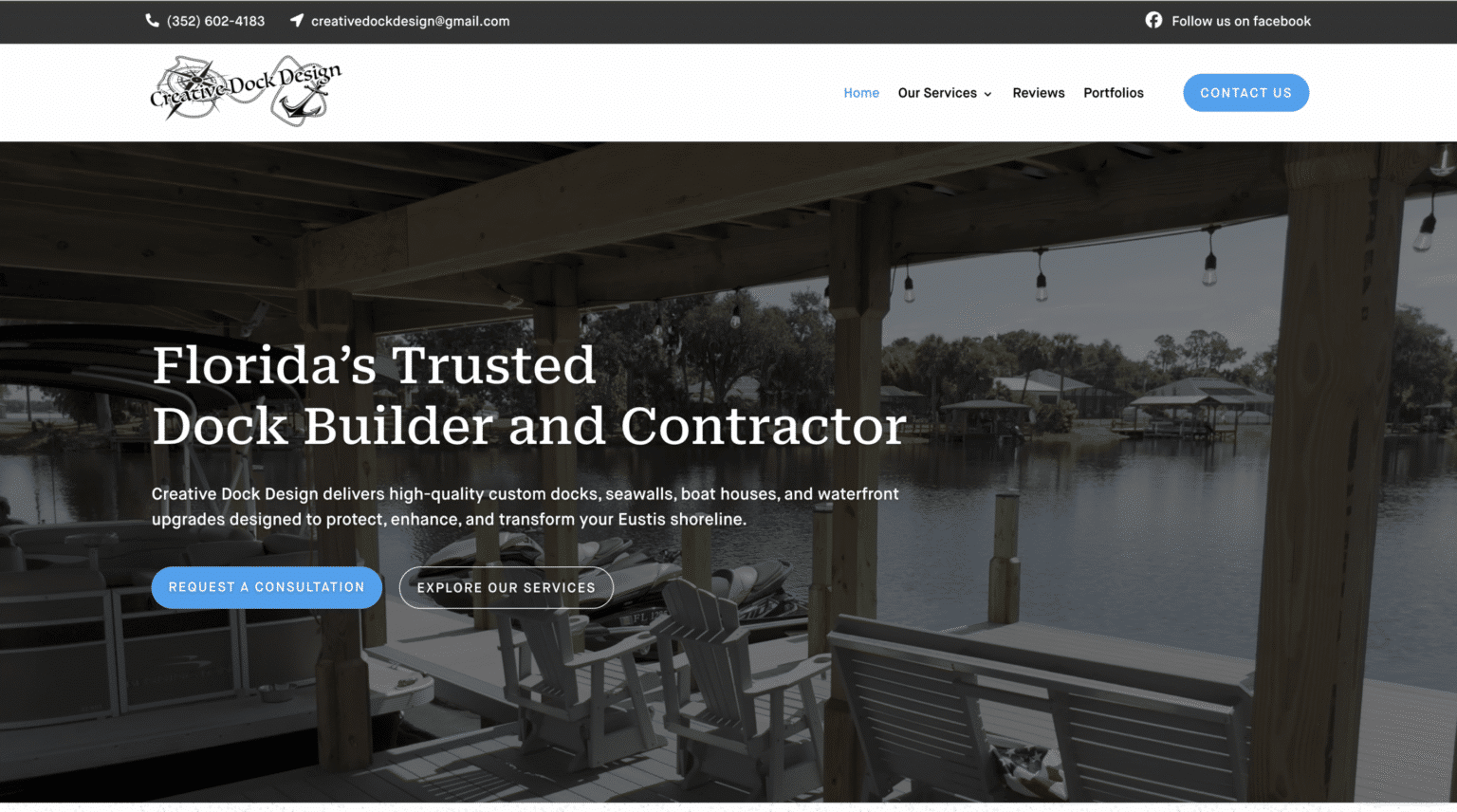
A contractor does not gain trust by saying "we care about quality." They gain trust by showing six recent local projects, noting insured status, describing how estimates work, and making it simple to request a visit. A med spa gains trust with credential visibility, treatment explanations, realistic photography, and a polished booking experience. A law office gains trust by clearly outlining practice areas, attorney backgrounds, what happens after the first call, and whether they handle nearby jurisdictions. A church, school, or nonprofit needs warmth and clarity, not corporate polish pasted over community life.
This is where experienced local designers often outperform template-first providers. They know that trust is not a visual style. It is an accumulation of small decisions that make a visitor feel oriented and confident.
The mobile experience matters even more than owners think
Most business owners know their site should work on mobile. Fewer understand how many potential customers never recover from a poor mobile experience. They do not complain. They simply leave.
In local service categories, mobile traffic often represents the majority of visits, sometimes well over half. The numbers vary by industry, but the pattern is hard to miss. People search from parking lots, office lobbies, kitchen counters, and school pickup lines. They are distracted. They are often evaluating several options at once. If your phone number is hard to tap, your text is cramped, your forms are tedious, or your pages take too long to load, you are leaking opportunity every day.
A local web design team is more likely to prioritize the scenarios your buyers actually live in. They understand that a parent looking for a pediatric dentist on a phone has different needs from a procurement manager researching B2B vendors from a laptop. They know that local intent often means urgency. Someone looking for flood cleanup, urgent care, towing, pet boarding, or same-week legal help has very little patience.
I have seen businesses double inquiry rates simply by improving the mobile contact path. No grand rebrand. No massive content buildout. Just better thumb-friendly buttons, shorter forms, stronger above-the-fold messaging, cleaner service pages, and faster load times. That is one reason web design should be judged by performance, not by how impressive it feels in a design presentation.
Local strategy creates better content, not just better layout
Many websites fail because the design and the messaging were developed separately, or worse, the messaging was an afterthought. A beautiful layout cannot rescue weak copy. Visitors need reasons to choose you, and those reasons should be expressed with precision.
Local expertise improves content because it sharpens relevance. It helps answer practical questions such as these: What should the homepage web design scalablewebsites.com promise? Which services deserve dedicated pages? How much educational content is useful before it becomes clutter? Which phrases sound credible to local buyers, and which sound inflated or vague?
For businesses in The Woodlands, content often works best when it balances polish with straightforwardness. Overly flashy copy can feel insincere. Flat, generic copy disappears into the background. The right middle ground is confident specificity.
A local clinic might mention insurance acceptance, appointment speed, and provider credentials early because those are major decision points. A landscaping company may benefit from discussing drainage, irrigation, curb appeal, and seasonal maintenance because those are recurring homeowner concerns in this region. A financial advisor may need a more measured tone, emphasizing fiduciary clarity, retirement planning, and long-term relationships. The structure changes because the audience changes.
This is why effective web design is as much editorial judgment as visual work.
Brand fit matters more than trendiness
Design trends move fast. Business websites should not. Chasing novelty usually ages badly and can quietly hurt usability. What matters more is whether the site fits your audience, your service model, and your sales process.
In The Woodlands, many businesses benefit from a polished, restrained style rather than hyper-creative layouts that call attention to themselves. That does not mean every site should look conservative. It means the design should support decision-making. If your visitors are comparing providers, evaluating professionalism, and looking for a reason to trust you, your website needs clarity first.
That might lead to different choices than a trend-focused studio would make. Perhaps your typography should be more readable and less stylized. Perhaps motion effects should be minimal so the site feels stable on mobile. Perhaps testimonials should sit closer to service descriptions instead of being hidden in a separate page. Perhaps your homepage should be shorter and more focused. Perhaps your strongest photos are not cinematic office shots but straightforward work examples that prove competence.
A local agency with experience in website design for small business tends to understand that trade-off. They are less likely to optimize for awards and more likely to optimize for booked calls.
Better collaboration leads to better decisions
One underrated benefit of hiring local for web design the woodlands is communication quality. Projects go off track when assumptions pile up. If the designer misunderstands your service area, your buyer profile, or your sales cycle, the final product will reflect that gap.
Local collaboration shortens the distance between what you mean and what gets built. Conversations are sharper because context is shared. When you mention a nearby competitor, a local team may know them. When you describe the type of customer you want more of, they can often picture that customer. When you debate whether to feature certain service areas, they can weigh the decision with local logic instead of guessing.
That saves time, but more importantly, it improves outcomes. Businesses often assume website projects fail because of bad execution. More often, they fail because of bad inputs. The strategy was fuzzy. The copy was generic. The business owner never clarified what a lead should look like. The developer delivered exactly what was requested, but what was requested was incomplete.
Local partners are not immune to these problems, of course. Some local agencies are mediocre. Some remote agencies are excellent. The point is not geography by itself. The point is whether the team understands your market deeply enough to make strong decisions without constant correction.
What to look for before you hire a web designer in The Woodlands
Not every company advertising web design brings the same level of strategic value. Some are skilled visual designers. Some are capable developers. Some are solid marketers. A smaller number can connect all three in a way that helps a local business grow.
When evaluating options, ask to see work for businesses that rely on local leads, not just pretty brands. Ask how they approach service-page structure, messaging, local SEO alignment, mobile conversion, and performance tracking. Ask what they would change on your current site first, and why. Strong teams can usually point to a few high-impact improvements quickly. Weak teams tend to speak in broad terms about aesthetics and innovation.
It also helps to pay attention to how they talk about your business. Do they ask smart, practical questions? Do they understand your sales process? Do they show curiosity about your ideal customer, margins, service areas, and differentiators? Or do they rush toward a proposal without enough discovery?
A useful way to judge fit is to notice whether they can explain trade-offs clearly. Every business has them. A luxury service brand may need fewer but better leads. A high-volume local operator may need stronger call flow and speed. A medical practice may need compliance awareness and a more careful content approach. A franchise location may face brand constraints. The right partner will not force every client through the same formula.
The cost of getting it wrong is usually hidden
A poor website does not always look poor. That is what makes it expensive. It can seem acceptable while quietly suppressing lead volume, lowering close rates, and weakening ad performance.
If your website attracts traffic but fails to convert, you pay twice. You pay once to build the site, and again every month in lost opportunity. The effects ripple outward. Your paid ads become less efficient. Your referral traffic converts at a lower rate than it should. Your sales team spends more time answering basic questions that the site should have handled. Prospects arrive less informed and less committed. Over a year, those small inefficiencies can easily outweigh the upfront savings of choosing a cheaper or less experienced provider.
For small businesses, that hidden cost is especially painful because each missed lead matters more. A few lost consultations per month can mean the difference between a site that merely exists and a site that genuinely contributes to growth.
That is why local expertise is not a luxury add-on. It is risk reduction. It increases the odds that your website reflects the realities of your market and supports the way people in this area actually make decisions.
The strongest sites feel obvious to the right visitor
When a website is doing its job well, it often feels simple. The visitor lands, understands the offering, sees proof, gets their questions answered, and takes the next step. There is no confusion about where to click. No uncertainty about whether the business serves their area. No vague language forcing them to decode what the company really does.
That kind of clarity rarely happens by accident. It comes from knowing the market, understanding customer behavior, and making disciplined choices. That is the case for local expertise in a sentence.
A site built with The Woodlands in mind will not try to impress everyone. It will connect quickly with the people most likely to become customers. It will sound like it belongs in this market. It will reflect local expectations around trust, convenience, and professionalism. It will make the next step easy, whether that is a call, a form submission, a booking, or a visit.
For businesses serious about growth, that is the real standard. Not whether the website wins compliments in a meeting. Whether it helps the right people choose you.
Scalable Websites
Website design for contractors and small businesses
Based in Montgomery, TX, serving Montgomery County and greater Houston
Phone: (832) 979-2478
Website: scalablewebsites.com
Hours: Monday to Friday, 8 AM to 5 PM
Scalable Websites builds and manages mobile-first websites for contractors and small businesses on simple monthly plans, with hosting, security and unlimited updates included. Find us on Google.